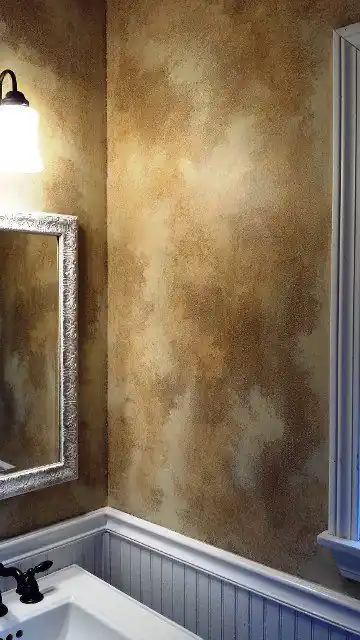
No. F-10 · Striping
Faux finishes for walls
Ragging, striping, faux marble, brick, texture, lettering and metallic paint: accent painting that turns a wall into decor, done by hand in Providence.
A wall that needs more than a color
Some walls are fine and still say nothing. The studio describes its faux work as "custom accent painting and finishing textures to your walls," and the point of it is exactly that: one surface in a room given a character that a roller of flat paint cannot supply.
It is also easy to get wrong. A glaze worked in the same sweep everywhere looks like a pattern, not a surface. Stripes bleed under tape that was not sealed. Marble drawn with every vein running the same direction looks like a printed pattern, not stone. A faux finish is a trade skill, and the difference shows in the first three feet from the wall.
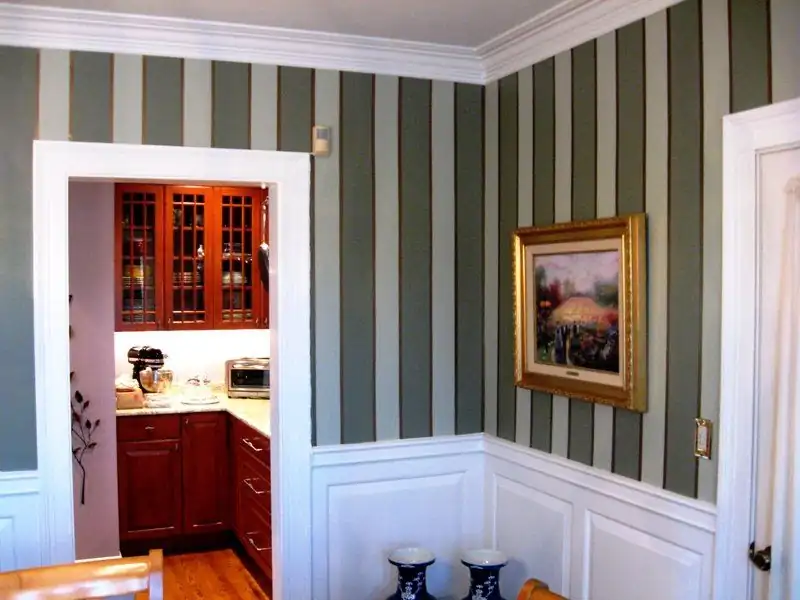
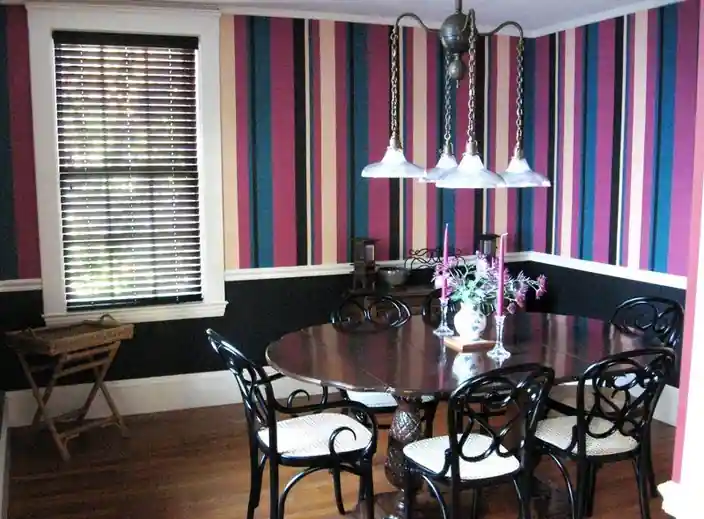
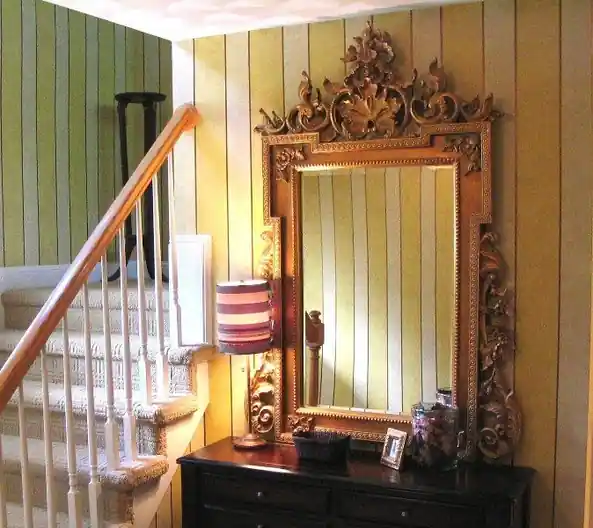
Sage green stripes over white wainscot in a dining room, painted by Renaissance Revival Painting
Glaze, tape, feather and trowel
Every finish starts with the same quiet work: patch, sand, prime and a base coat chosen for what will sit on top of it. Ragging then goes over that base as a tinted glaze, pressed on and lifted off with a rag in a shifting rhythm so no two patches repeat. Striping is measured and taped, and the tape edge is sealed with the base color first so the second color cannot creep under it.
Faux marble is built in stages: a tinted ground, then veins pulled across it with a feather and a fan brush, then softened with a dry brush so the stone looks as if it runs deeper than the paint. Faux brick and faux texture use glazes, compounds and a trowel or sponge to give a flat wall courses, mortar lines and relief. Lettering is drawn out in chalk first, then painted by hand.
Venetian plaster and metallic paint belong to the same family, and have a page of their own for the layers and burnishing involved.
Choosing where the finish goes
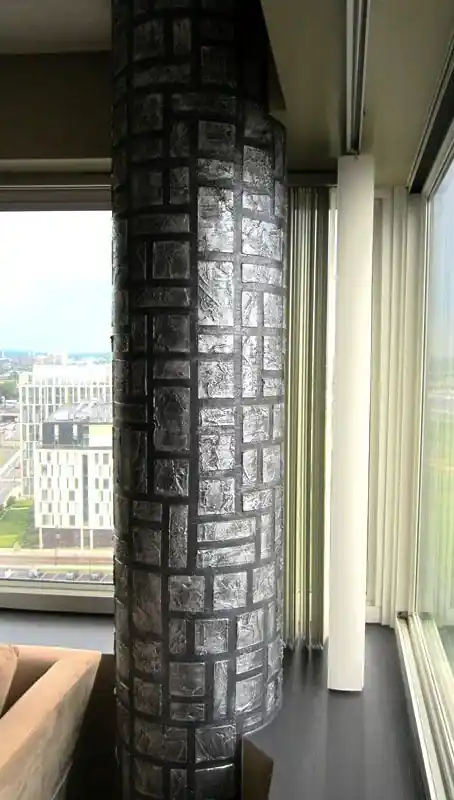
Faux work usually lands on one wall: behind a dining table, around a fireplace, on a column, up a stair hall, across a powder room where the room is small enough to carry something bold. The painters, who come from a fine-arts and color-theory background, pick tone and scale for the room's light, not from a swatch fan.
Finished walls care for themselves with a soft dry cloth and a barely damp one. Because the surface is hand-built, a scuff can be blended in by hand later, instead of redoing the whole wall.
For homes in Providence and Newport, and across the line in Boston and Worcester, call (401) 351-4757, Monday to Friday, 8 AM to 5 PM, to talk through a wall and arrange a free estimate.
Owner-operated in Providence since 2001 · fine arts and color theory · free estimates
The studio's list
Every technique, beside a wall that uses it
These are the techniques the studio lists, in plain terms. Where a finished wall exists on its record it hangs beside the entry; the whole range is on the faux finishes portfolio, and plaster has its own page at Venetian plaster and metallics.
Stone, plaster and metal
Venetian Plaster
Thin plaster coats trowelled and burnished to a polished, stone-like depth.
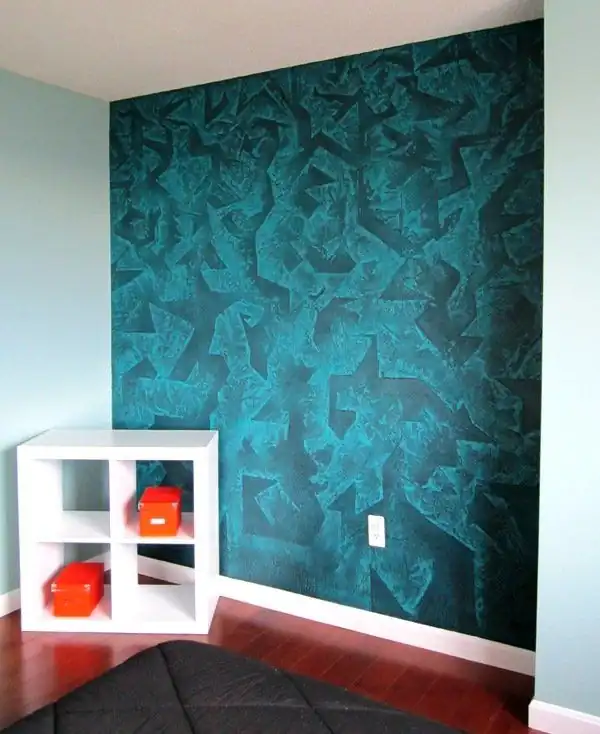
Faux Marble
Veining feathered over a tinted ground until it reads as quarried stone.
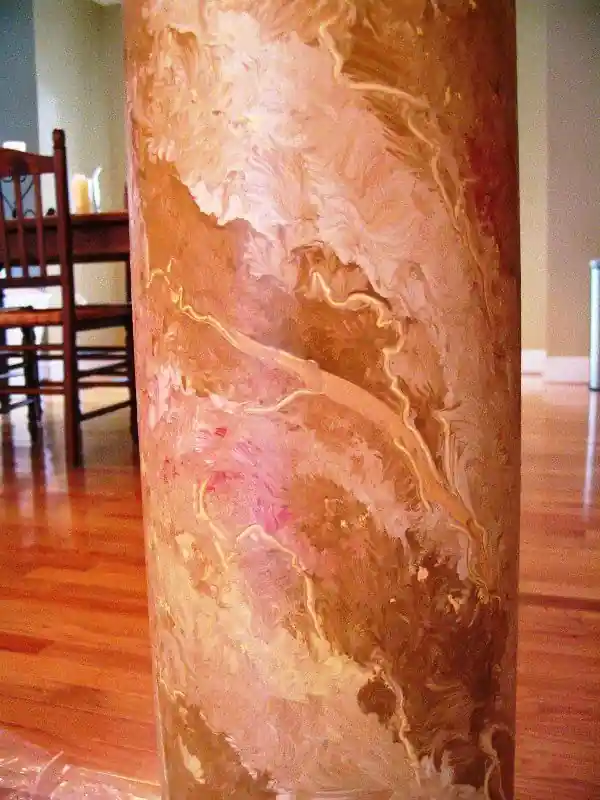
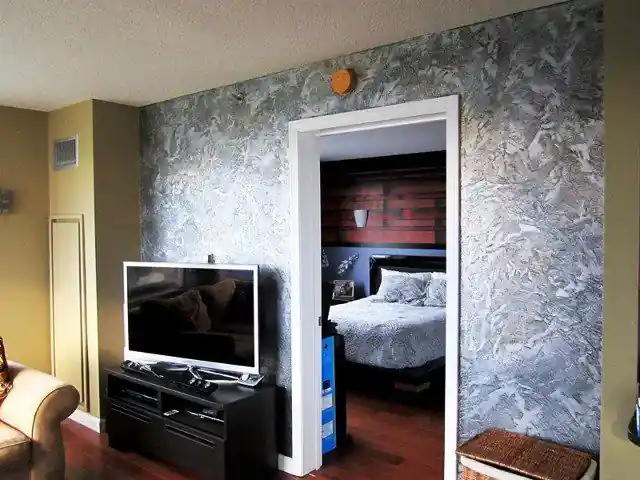
Faux Texture
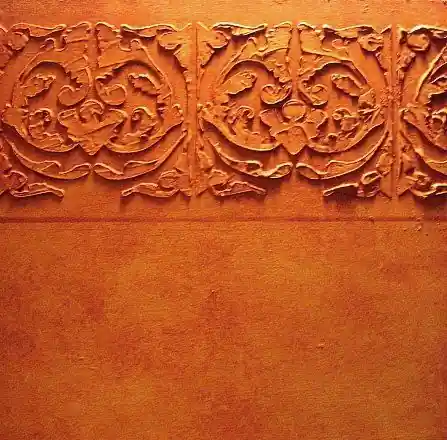
Glazes and compounds worked into the surface for tooth, depth and shadow.
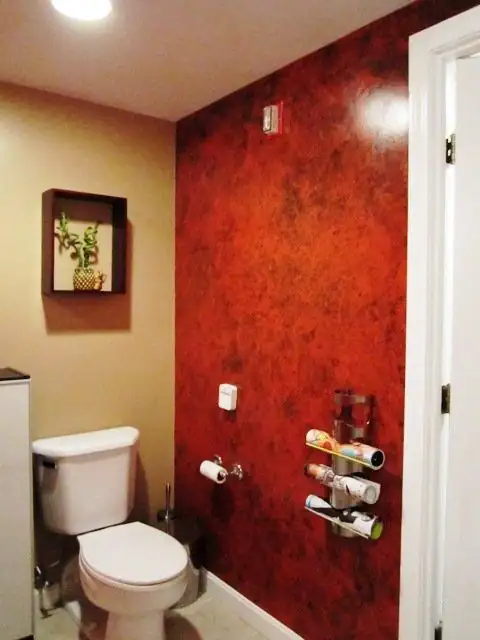
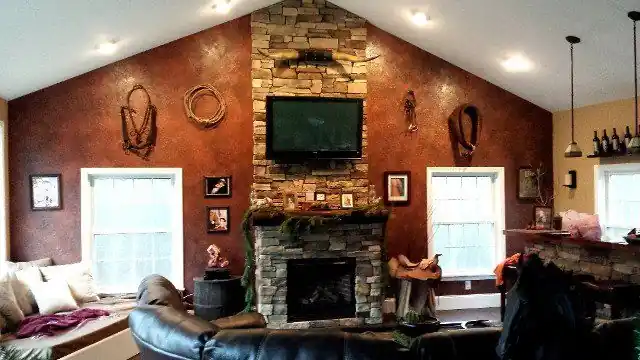
Metallic Paint
Copper, silver, bronze and pearl pigments that catch the light as you pass.
Pattern, line and letter
Ragging
A tinted glaze dabbed or lifted with a rag over a base coat, for a soft, cloudy texture.
On request
Striping
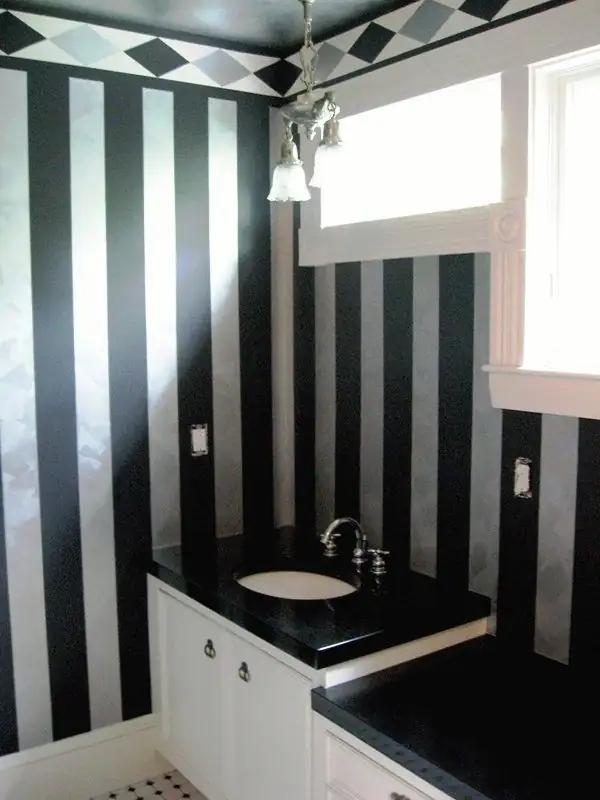
Tape-edged bands of tone or sheen laid down a wall, crisp or soft.
Faux Brick
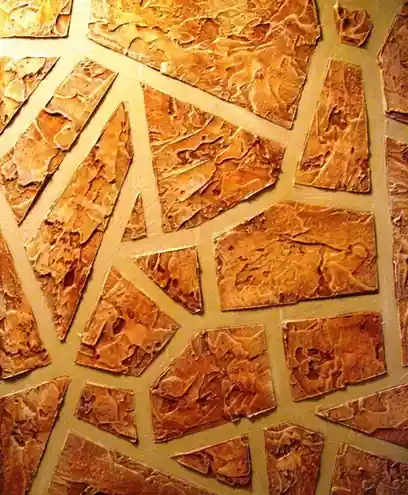
Courses and mortar lines painted onto a plain wall, or built up with texture.
On request
Lettering
Words, names and monograms painted straight onto the wall by hand.
On request
More walls from the hang