No. R-02 · Interior painting
Interior painting for walls, woodwork and ceilings
Straight painting done the slow way: the staining, sanding, filling and priming first, then walls, woodwork and ceilings finished to your specifications.
What a skipped prep day costs you later
Paint is the thin, visible layer on top of a job whose real work is underneath. When the underneath is rushed, the room tells on itself within a season: a seam that lifts at a corner, a patch that shows through the finish like a bruise, a shiny halo where a repair was never primed and the sheen came up different from the wall around it.
Old wallpaper is the classic trap. Paint over it and the moisture in the new coat reactivates the paste, so the paper bubbles and the seams telegraph straight through. Paint over wallpaper glue that was never washed off and the wall never quite dries to a hard surface. Neither shows on the day the painters leave, which is exactly why they get skipped.
Light is the other honest judge. A wall that looks flat at noon will flash and ripple when a lamp rakes across it at night, and every sanding shortcut becomes a visible ridge. A room is only as good as its worst patch under its harshest light.
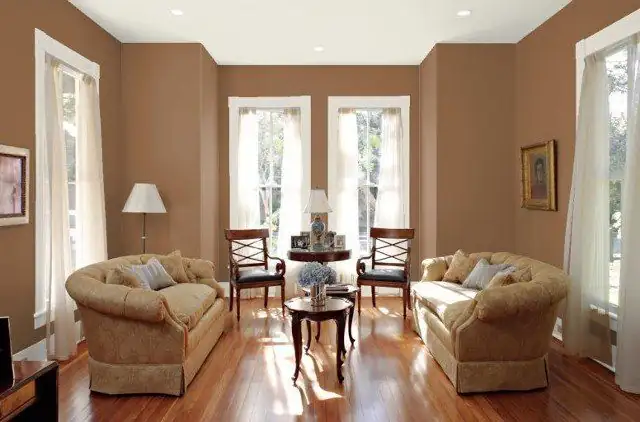
A living room painted in a warm taupe by Renaissance Revival Painting
Prep is most of the job
Renaissance Revival Painting lists its straight painting plainly: staining, sanding, filling, wallpaper removal, light restoration, priming, and the preparation and painting of walls, woodwork and ceilings. That is the order a good room is built in. Wallpaper comes off and the glue is washed away. Cracks and nail holes are filled and sanded flush. Bare wood and patched plaster get primed so the finish coat dries evenly instead of soaking in patch by patch.
The studio is owner-operated and has been painting interiors in Providence since 2001, with skilled backgrounds in fine arts and color theory. In practice that means the person who walks the room with you is the person who knows how the paint will behave in it. Their own line says it well: “From giving a room a fresh coat to creating a ‘magazine finished’ environment, we work to your specifications.”
Call (401) 351-4757 and describe the rooms. A fresh coat on sound walls and a full restoration of tired plaster are different jobs with different prep, and the estimate is free either way.
Cut lines, sheens and the room you live in
The finished room is judged at its edges. A clean cut line where the wall meets the ceiling, crisp trim that does not creep onto the wall, and baseboards that look like they were painted before the floor went down: these are small things a visitor never names and always feels.
Sheen is chosen surface by surface. Ceilings want a flat finish that hides the roll of light across them. Walls usually sit in a low sheen that wipes clean without glaring. Woodwork takes a harder, glossier coat because hands, shoes and vacuum cleaners find it first. Putting the same sheen on everything is the quickest way to make a room look like a rental.
After the work is done, a painted room asks for little: wait for the paint to cure before scrubbing, keep leftover color labeled for touch-ups, and wipe marks gently rather than rubbing through the finish. If the walls are the start of a bigger idea, the same hands can add a faux finish or a mural to one of them.
Owner-operated in Providence since 2001 · fine arts and color theory · free estimates
Rooms, hung like swatches
A swatch shows a color. A finished room shows what that color does with a window, a ceiling and the furniture. These are rooms from the studio's own gallery, catalogued the way the rest of the walls are.
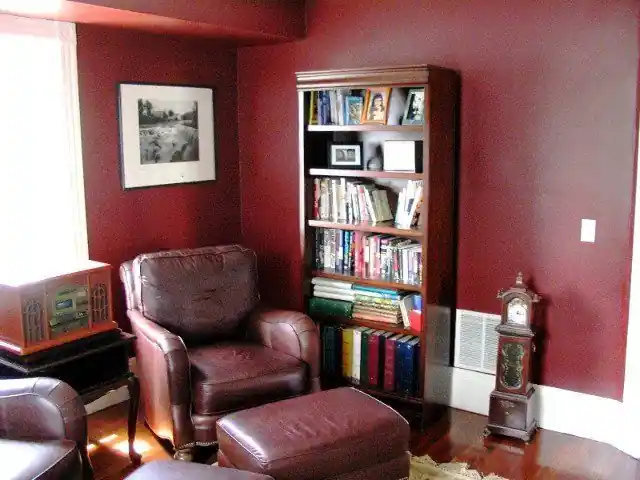

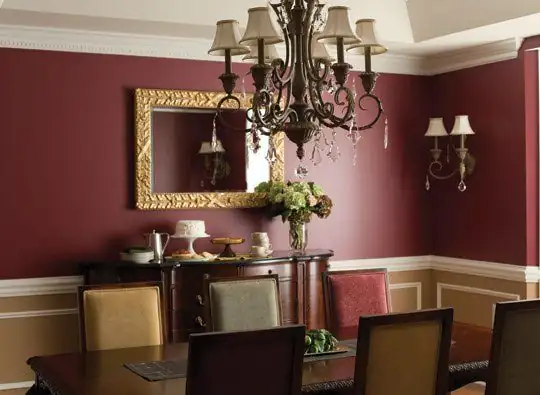
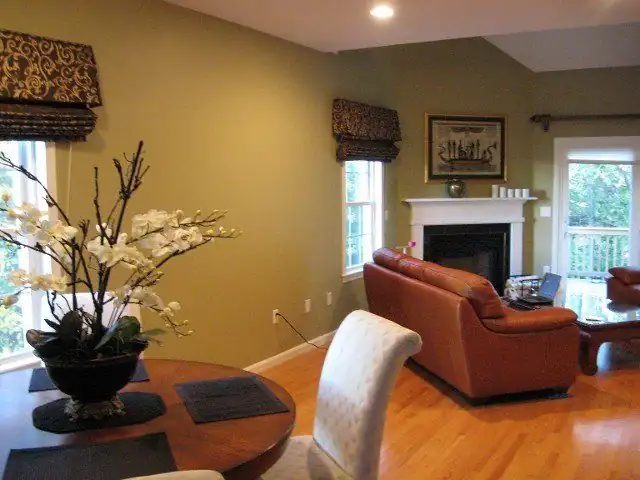

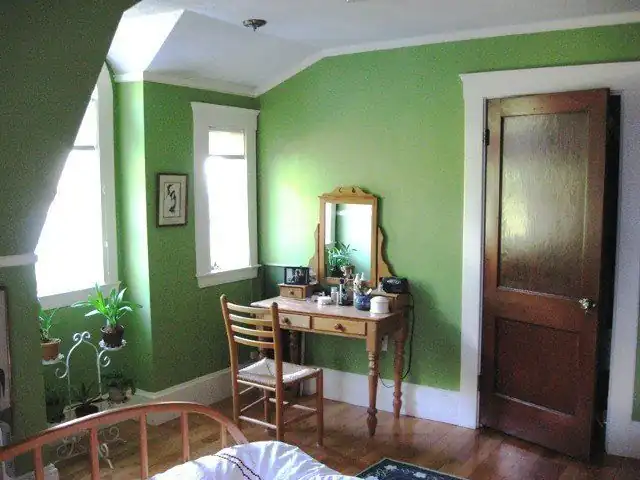
Every painted room in the gallery sits on its own plate in the interior painting portfolio.
Not sure which of these colors belongs in your house? That question has its own page: color consultation.